THE LONE RANGER CAT RESCUE

Caring for Your Cat
How to introduce your new pet to their new home and look after them
Introduction to a New Home


When introducing a cat to a new home it is recommended to confine the cat to a single room until they become used to the sounds and smells of the new environment.
If you have resident cats in your home, introduce them to your new cat by scent alone initially. This can be done either by feeding them on either side of the same door, or by exchanging towels or blankets covered in their scent.
The next stage for a successful introduction, is to confine your resident cats to a room away from their usual living area, and allow your new cat to roam their primary living area for 15 minutes, once complete return the new cat to their original room. This allows the new cat to become familiar with the new environment and the presence of your resident cats' scent. It also allows your resident cats to recognize a new cat in their living area.
Once this routine has been completed two or three times a day for several days, then you can introduce the new cat to your resident cats for a limited period, again two or three times a day for several days. Depending on how they react, you will be able to determine when they are ready for full immersion.


Veterinary Care
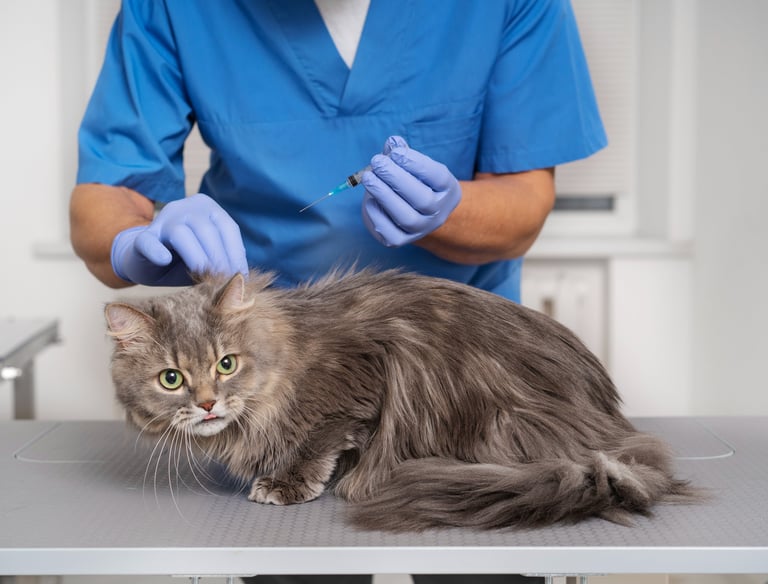
Adopting a cat brings the responsibility to keep them free from disease and discomfort. All cat parents are strongly recommended to purchase insurance to cover medical bills for emergencies and illnesses.
Play
Schedule short, frequent interactive sessions. Aim for 2–3 sessions per day, each lasting 10–15 minutes (or until your cat loses interest). This provides enough exercise without overwhelming them. Play in the morning and evening when cats are most active.
Use toys that mimic prey. Wand or feather teasers are excellent for encouraging jumping, swatting, and pouncing. Move them erratically like a bird or insect—drag on the ground, dart across the room, or dangle overhead. Let your cat "catch" the toy occasionally for satisfaction. Toy mice or balls to bat and chase also work well.
Incorporate laser pointers wisely. Lasers provide high-energy chasing fun, but always end the session by letting your cat "catch" a physical toy or treat to avoid frustration.
Add mental stimulation with puzzle toys. Food-dispensing puzzles or treat balls turn mealtime into a hunting game, promoting slower eating, problem-solving, and exercise. Great for solo play when you're away.
Rotate toys and observe preferences. Keep things fresh by rotating toys weekly to prevent boredom. Pay attention to your cat's body language—forward ears, dilated pupils, and eager pouncing mean they're engaged. Never use hands or feet as toys to avoid encouraging biting/scratching.
Administration
Once you have adopted your new cat, we recommend you register with a pet microchip registration site, this means your cat, their microchip and you are associated together.
Food
Feeding a newly adopted cat requires patience, as the transition to a new home can be stressful and affect their appetite. Here are some useful, tips to help your cat adjust and stay healthy.
Start with Familiar Food. You should be advised by the rescue what food your cat was eating and get a supply of it. Stick to this for the first few days or until they're eating regularly. Sudden changes can cause digestive upset such as vomiting or diarrhea.
Gradual Food Transition. If switching to a new food, do it slowly over 7-10 days to avoid stomach issues:
Days 1-2: 75% old food + 25% new
Days 3-4: 50% old + 50% new
Days 5-6: 25% old + 75% new
Day 7+: 100% new
Mix wet and dry thoroughly. If your cat shows signs of upset (e.g., reduced eating, soft stools), slow down or consult a vet.
Collecting your new Furbaby
When you collect your new furbaby, we strongly recommend you use a hard-sided pet carrier. You should always line the bottom of the carrier with a peepad or a blanket or both, and you should have a spare blanket to throw over the carrier when it is being moved to keep the cat calm.
Litter Boxes
All of our cats use open litter boxes but enclosed litter boxes are fine. We recommend stainless steel boxes over plastic boxes because they are easier to clean and do not retain odours.
Robot litter boxes should be researched carefully, as there have been reports of some models harming cats through their mechanisms.